
If you operate a service business in Philadelphia — whether you are a plumber, electrician, HVAC technician, roofer, landscaper, cleaning service, or general contractor — your vehicles are already working hard every single day. They carry your equipment, your team, and your reputation from job site to job site across the city and its surrounding neighborhoods. The question is whether they are also working hard for your marketing. Without professional fleet wraps, the answer is almost certainly no.
A fleet of unbranded or minimally branded vehicles represents one of the most significant missed marketing opportunities available to Philadelphia service businesses. Every mile driven, every job site parked at, every neighborhood traveled through is an impression that goes uncaptured — a potential customer who saw your van but had no idea who you were or how to contact you. Professional fleet wraps transform that missed opportunity into a 24-hour, neighborhood-level marketing engine that costs a fraction of what traditional advertising channels charge for equivalent local reach.
This guide covers everything Philadelphia service business owners need to know about fleet wraps: the business case, the design principles, the material standards, the installation process, and how to maximize the return on your fleet wrap investment over the long term.
The economics of fleet wrap advertising are compelling by any standard measurement. A professional full vehicle wrap in the Philadelphia market typically costs between $2,500 and $4,500 per vehicle, depending on vehicle size and design complexity. Premium-grade wrap materials from manufacturers like 3M and Avery Dennison carry rated lifespans of five to seven years under normal outdoor conditions. Over a five-year period, that translates to an annual cost of $500 to $900 per vehicle — before any accounting for the impressions and leads the wrap generates.
To put that in context: a single month of Google Local Services Ads in competitive Philadelphia service categories like plumbing, electrical, or HVAC can cost $800 to $2,000 or more depending on competition and call volume. A single direct mail campaign to 5,000 Philadelphia households costs $1,500 to $3,000 in printing and postage — for a one-time distribution. Your fleet wrap, by contrast, makes thousands of impressions per day in your actual service area, every day, for five years, at an annualized cost that no other local advertising channel can match.
Beyond the pure cost economics, fleet wraps deliver something that digital advertising and direct mail fundamentally cannot: physical presence and social proof within the neighborhoods where your customers live and work. When a homeowner in Roxborough or Mayfair or Cheltenham sees a professional, well-branded service vehicle parked at a neighbor’s house or driving through their block regularly, it builds familiarity, credibility, and top-of-mind awareness in a way that no digital impression can replicate. When that homeowner eventually needs your service, your company is the one they think of first — because they have seen you, physically, in their neighborhood, over and over again.
Not every fleet wrap decision is the same, and the right choice depends on your budget, your fleet composition, and your marketing goals. Understanding the specific advantages and limitations of each option allows you to allocate your investment strategically.
A full vehicle wrap covers the entire exterior surface of the vehicle — hood, roof, doors, rear, and bumpers — in branded graphics. It is the highest-impact option, producing a professional appearance that transforms any vehicle into an unmistakable, attention-commanding marketing asset. Full wraps also provide the additional benefit of protecting the vehicle’s original paint from UV damage, minor abrasions, and weathering — which preserves resale value when the wrap is eventually removed.
Full wraps are the recommended choice for primary service vehicles — the vans and trucks that are most visible, most frequently in the field, and most likely to be parked at job sites where potential customers and neighbors will see them. For a service business that wants to make the strongest possible local brand statement, the full wrap is the definitive choice.
Partial wraps cover selected portions of the vehicle — most commonly the rear panel, both sides, and the tailgate — leaving the hood and roof in the vehicle’s original color. Partial wraps cost approximately 40% to 60% less than full wraps and can still deliver strong visual impact when designed skillfully. They are a practical choice for businesses that want professional fleet branding on a more conservative budget, or for secondary vehicles that see less customer-facing exposure than primary service units.
The key to an effective partial wrap is designing with the partial coverage in mind from the start — not simply shrinking a full wrap design. The most effective partial wraps use the vehicle’s original color as an intentional design element, integrating it with the wrap graphics rather than simply stopping abruptly where the vinyl ends.
Magnetic vehicle signs offer maximum flexibility at the lowest entry cost. They can be removed and repositioned on different vehicles, taken off when personal use of a company vehicle is desired, and updated without the cost of a full rewrap. However, they also deliver the weakest visual impact of the three options — magnets rarely cover enough surface area to create the commanding brand presence of a professionally wrapped vehicle. For businesses just starting out or operating mixed personal-commercial fleets, magnets are a reasonable starting point. For established service businesses committed to building serious local brand presence in Philadelphia, the investment in a proper wrap delivers dramatically superior returns.
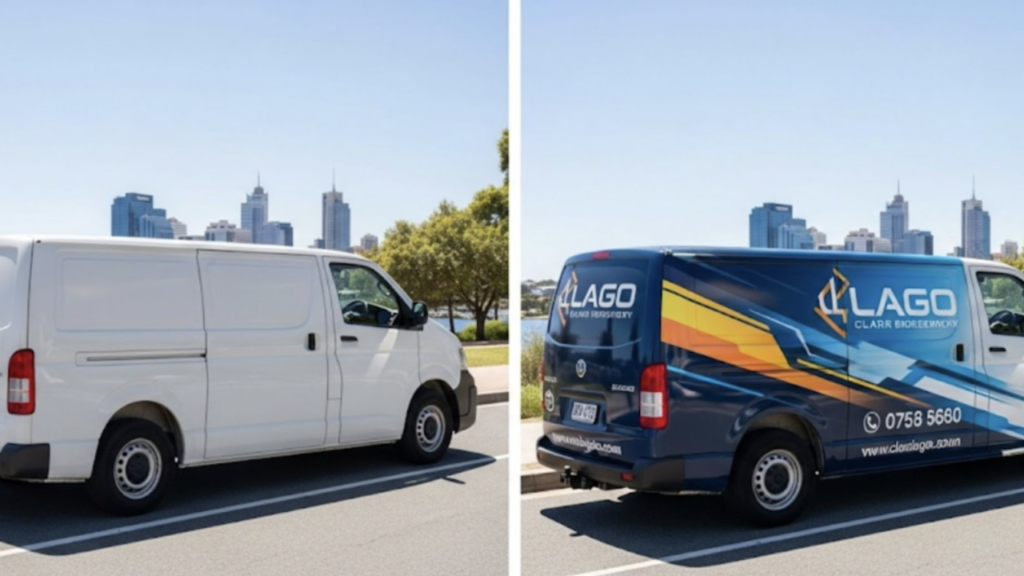
The design of your fleet wrap is the single most important factor determining whether it generates leads or simply rides around being ignored. Drivers and pedestrians make split-second decisions about whether to read a vehicle. You have approximately two to three seconds of attention at highway speeds and five to eight seconds in slower urban traffic. Every design decision must be evaluated against that fundamental reality.
The most effective fleet wrap designs in Philadelphia’s market share the following characteristics. First, they use high-contrast color combinations that are immediately distinguishable from surrounding traffic and urban environments. Dark vehicle colors with bright graphics, or vivid brand colors on white backgrounds, consistently outperform low-contrast, muted palettes in real-world attention capture. Second, they communicate the core message — business name, primary service, and phone number — in large enough typography to be read clearly from 50 feet at moderate speeds. If a passerby cannot read your business name and phone number in under three seconds, the design has failed its primary purpose regardless of how attractive it may look in a presentation mockup.
Third, effective fleet wrap designs for service businesses are intentionally simple. The temptation to include every service you offer, multiple phone numbers, a website, social media handles, and a detailed company description in the design is understandable — but every additional element reduces the impact of every other element. Choose the single most important message and make it impossible to miss. Secondary information like websites and social handles can be included in smaller supporting text for viewers who are parked or stopped adjacent to the vehicle.
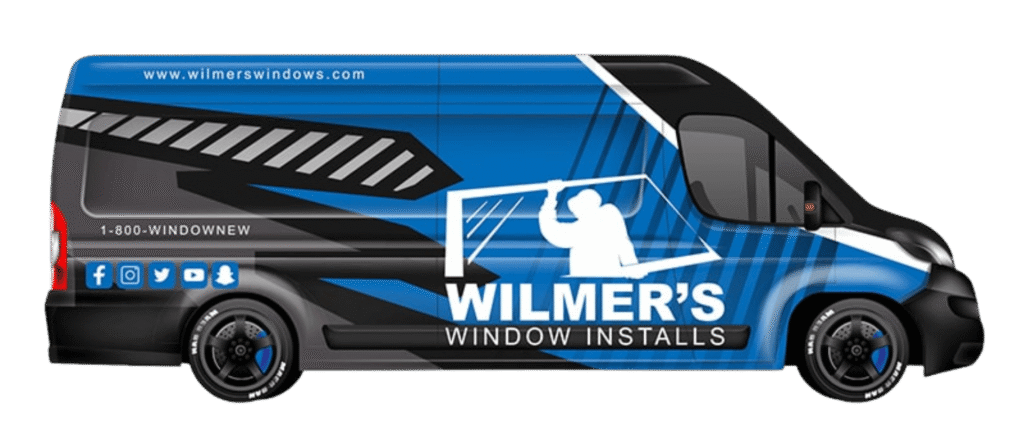
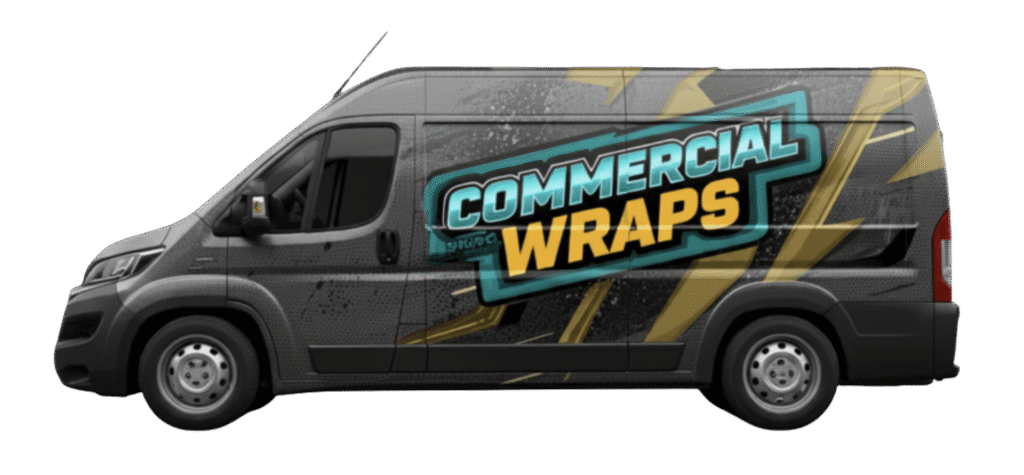
The quality of the vinyl film used in your fleet wrap directly determines how long it looks good and how well it performs on your vehicles. Not all wrap vinyl is equivalent, and the difference in quality between premium and budget materials is not subtle — it is dramatic and visible within twelve to eighteen months of installation.
Insist on cast vinyl film from 3M or Avery Dennison for any fleet wrap project. Cast vinyl is manufactured through a process that produces a film with memory — it conforms to vehicle curves, contours, and recesses without stress, maintains dimensional stability over years of outdoor exposure, and releases cleanly from the vehicle’s paint when removal time comes. The 3M 1080 series and Avery Dennison Supreme Wrapping Film are industry benchmarks for quality and durability, with rated lifespans of five to seven years under normal outdoor conditions.
Budget wrap companies frequently use calendered vinyl — a lower-cost film manufactured through a different process that is suitable for flat surface applications but performs poorly on vehicle curves. Calendered vinyl shrinks over time, lifts at edges and seams, fades unevenly, and becomes difficult to remove cleanly after two to three years. The cost savings at the point of purchase are entirely consumed by premature rebranding costs, and the intermediate period of a deteriorating wrap actively damages your brand presentation.
The most successful Philadelphia service businesses approach fleet wrapping as a systematic, long-term brand-building strategy rather than a one-time transaction. Start with your highest-visibility primary service vehicles — the ones that are on the road the most and most frequently parked at customer-facing job sites. Establish a consistent design template so that as you add vehicles, each new wrap reinforces rather than fragments the brand presence you are building across the city’s neighborhoods.
As your fleet grows, the cumulative effect of consistent, professional fleet branding compounds significantly. Two wrapped vehicles in a neighborhood create awareness. Five wrapped vehicles in regular rotation across your service area create genuine market presence. Ten wrapped vehicles operating throughout Philadelphia and its surrounding suburbs create the kind of omnipresent brand familiarity that makes your business the automatic first call for anyone in your service area who needs what you offer.